

Specialty Natural Medicine
Alternative/Holistic Medicine
Mukilteo / WA / US
 0 (0)
0 followers
Thyroid Care Explained
Let's delve into the fascinating world of thyroid health. The thyroid, a remarkable butterfly-shaped gland nestled in your neck, plays a crucial role in regulating metabolism and blood calcium levels through hormone secretion. In this article, we'll spotlight two key hormones responsible for metabolism regulation: T3 and T4.
Thyroid Hormones
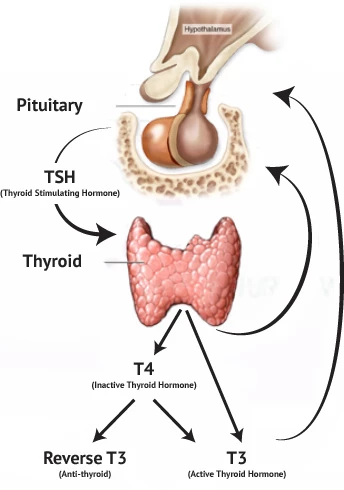
Triggered by thyroid stimulating hormone (TSH) from the pituitary gland, the thyroid secretes T3 (20%) and T4 (80%). These hormones, synthesized from tyrosine (an amino acid) and iodine (a trace element), wield significant influence over metabolism. While T4 is produced in larger quantities, T3 holds greater metabolic sway. Upon release, approximately 80% of T4 undergoes conversion into the more potent T3 through de-iodination. Notably, T4 can also convert into reverse T3, which competes with T3 for receptor binding, hindering its action. Elevated reverse T3 levels, often seen in stressful or malnourished states, may trigger hypothyroid symptoms despite seemingly normal thyroid hormone levels. Monitoring TSH levels aids in assessing thyroid function, with high TSH indicating potential hypothyroidism.
Potential Issues
Hypothyroidism arises from either insufficient hormone levels or reduced hormonal activity. While conventional screenings rely heavily on TSH, comprehensive evaluation involves assessing T3, T4, and thyroid antibodies. Adrenal function evaluation may also be warranted due to the adrenal-thyroid connection. This comprehensive approach helps identify:
- Hashimoto's thyroiditis: an autoimmune condition marked by antibody-mediated thyroid damage, commonly associated with hypothyroidism.
- Impaired T4 to T3 conversion, often overlooked in standard testing.
- Hypothyroidism linked to adrenal dysfunction.
- Nutrient deficiencies impacting thyroid function.
- Issues higher up in the hormonal cascade, such as pituitary dysfunction.
Symptoms of Hypothyroidism
- Fatigue
- Weight gain
- Brain fog
- Reduced pain tolerance
- Constipation
- Cold intolerance
- Dry skin
- Hair loss
- Irregular menstrual cycles
Hypothyroidism affects a significant portion of the population, with estimates ranging from 1% to 8%, and millions potentially undiagnosed. While more prevalent in females, it can impact males as well. If you suspect hypothyroidism or already have a diagnosis, don't hesitate to reach out to explore how we can support your health journey.
Let's delve into the fascinating world of thyroid health. The thyroid, a remarkable butterfly-shaped gland nestled in your neck, plays a crucial role in regulating metabolism and blood calcium levels through hormone secretion. In this article, we'll spotlight two key hormones responsible for metabolism regulation: T3 and T4.
Thyroid Hormones
Triggered by thyroid stimulating hormone (TSH) from the pituitary gland, the thyroid secretes T3 (20%) and T4 (80%). These hormones, synthesized from tyrosine (an amino acid) and iodine (a trace element), wield significant influence over metabolism. While T4 is produced in larger quantities, T3 holds greater metabolic sway. Upon release, approximately 80% of T4 undergoes conversion into the more potent T3 through de-iodination. Notably, T4 can also convert into reverse T3, which competes with T3 for receptor binding, hindering its action. Elevated reverse T3 levels, often seen in stressful or malnourished states, may trigger hypothyroid symptoms despite seemingly normal thyroid hormone levels. Monitoring TSH levels aids in assessing thyroid function, with high TSH indicating potential hypothyroidism.
Potential Issues
Hypothyroidism arises from either insufficient hormone levels or reduced hormonal activity. While conventional screenings rely heavily on TSH, comprehensive evaluation involves assessing T3, T4, and thyroid antibodies. Adrenal function evaluation may also be warranted due to the adrenal-thyroid connection. This comprehensive approach helps identify:
- Hashimoto's thyroiditis: an autoimmune condition marked by antibody-mediated thyroid damage, commonly associated with hypothyroidism.
- Impaired T4 to T3 conversion, often overlooked in standard testing.
- Hypothyroidism linked to adrenal dysfunction.
- Nutrient deficiencies impacting thyroid function.
- Issues higher up in the hormonal cascade, such as pituitary dysfunction.
Symptoms of Hypothyroidism
- Fatigue
- Weight gain
- Brain fog
- Reduced pain tolerance
- Constipation
- Cold intolerance
- Dry skin
- Hair loss
- Irregular menstrual cycles
Hypothyroidism affects a significant portion of the population, with estimates ranging from 1% to 8%, and millions potentially undiagnosed. While more prevalent in females, it can impact males as well. If you suspect hypothyroidism or already have a diagnosis, don't hesitate to reach out to explore how we can support your health journey.
0 Likes
