

Welch Tree Service
Gardening
Granite Falls / WA / US
 0 (0)
0 (0)
0 followers
Proper Pruning of Young Trees for Optimal Health
Pruning young trees is a crucial step in ensuring their long-term health and structural integrity. Proper pruning not only contributes to their overall well-being but also reduces the need for costly maintenance in the future. Here are key considerations for effective pruning of young trees:
Pruning Objectives:
The primary goal of pruning young trees is to enhance their structural development. Careful pruning ensures a strong framework and prevents potential issues as the tree matures. It is essential to consider how the tree's growth may interact with its surroundings.
Initial Pruning:
During the first 2 to 3 years after planting, focus on pruning only dead or broken branches. The tree needs time to recover from the stress of planting, and extensive pruning during this period can be detrimental.
Trunk Development:
A well-developed trunk is crucial for good tree structure. Maintain a dominant upward-growing trunk, known as the leader, without cutting it back. If there are multiple nearly equal-sized leaders (codominant stems), remove or shorten one to avoid structural weakness.
Permanent Branch Selection:
Identify branches that will become part of the permanent scaffold structure. Consider the clearance needed as the tree grows, such as vehicle passage or pedestrian space. Prune accordingly to create a strong and well-spaced branch framework.
Scaffold Structure:
Establishing strong scaffold branches is cost-effective, as it reduces the need for corrective pruning in the future. Mimic is the natural growth pattern found in forests, where neighboring trees limit the number of branches. Properly spaced and balanced branches contribute to a robust scaffold structure.
Branch Spacing and Balance:
Maintain both vertical and radial spacing and balance of branches. Permanent branches should ideally be spaced about 3% of the tree's grown height apart. Pay attention to branch thickness and angle of attachment to the trunk for optimal strength.
Watch Angles and Attachment:
Avoid narrow angles of attachment that can lead to included bark, weakening branch unions. Trim small branches with included bark early to minimize negative impacts. Aim for a balanced distribution of branches around the trunk to ensure proper structural support.
Pruning Tips:
Avoid removing too many branches, as leaves play a vital role in food production and storage. Excessive canopy removal stresses the tree and hampers its ability to nourish itself, affecting overall growth.
Given the intricacies of proper pruning, it is advisable to enlist the services of a professional arborist. from Welch Tree Service can provide expert guidance and estimates for effective pruning that promotes the optimal health of young trees. Contact us today to schedule a consultation.
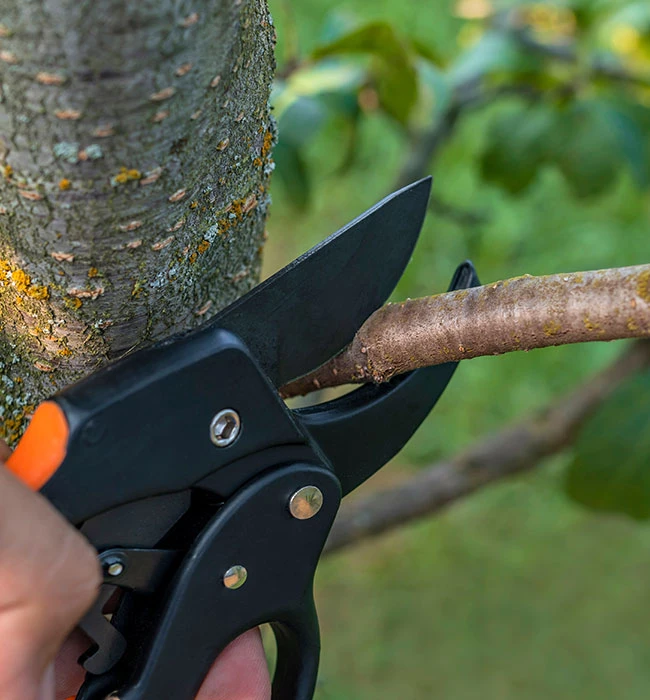
Pruning young trees is a crucial step in ensuring their long-term health and structural integrity. Proper pruning not only contributes to their overall well-being but also reduces the need for costly maintenance in the future. Here are key considerations for effective pruning of young trees:
Pruning Objectives:
The primary goal of pruning young trees is to enhance their structural development. Careful pruning ensures a strong framework and prevents potential issues as the tree matures. It is essential to consider how the tree's growth may interact with its surroundings.
Initial Pruning:
During the first 2 to 3 years after planting, focus on pruning only dead or broken branches. The tree needs time to recover from the stress of planting, and extensive pruning during this period can be detrimental.
Trunk Development:
A well-developed trunk is crucial for good tree structure. Maintain a dominant upward-growing trunk, known as the leader, without cutting it back. If there are multiple nearly equal-sized leaders (codominant stems), remove or shorten one to avoid structural weakness.
Permanent Branch Selection:
Identify branches that will become part of the permanent scaffold structure. Consider the clearance needed as the tree grows, such as vehicle passage or pedestrian space. Prune accordingly to create a strong and well-spaced branch framework.
Scaffold Structure:
Establishing strong scaffold branches is cost-effective, as it reduces the need for corrective pruning in the future. Mimic is the natural growth pattern found in forests, where neighboring trees limit the number of branches. Properly spaced and balanced branches contribute to a robust scaffold structure.
Branch Spacing and Balance:
Maintain both vertical and radial spacing and balance of branches. Permanent branches should ideally be spaced about 3% of the tree's grown height apart. Pay attention to branch thickness and angle of attachment to the trunk for optimal strength.
Watch Angles and Attachment:
Avoid narrow angles of attachment that can lead to included bark, weakening branch unions. Trim small branches with included bark early to minimize negative impacts. Aim for a balanced distribution of branches around the trunk to ensure proper structural support.
Pruning Tips:
Avoid removing too many branches, as leaves play a vital role in food production and storage. Excessive canopy removal stresses the tree and hampers its ability to nourish itself, affecting overall growth.
Given the intricacies of proper pruning, it is advisable to enlist the services of a professional arborist. from Welch Tree Service can provide expert guidance and estimates for effective pruning that promotes the optimal health of young trees. Contact us today to schedule a consultation.
0 Likes
